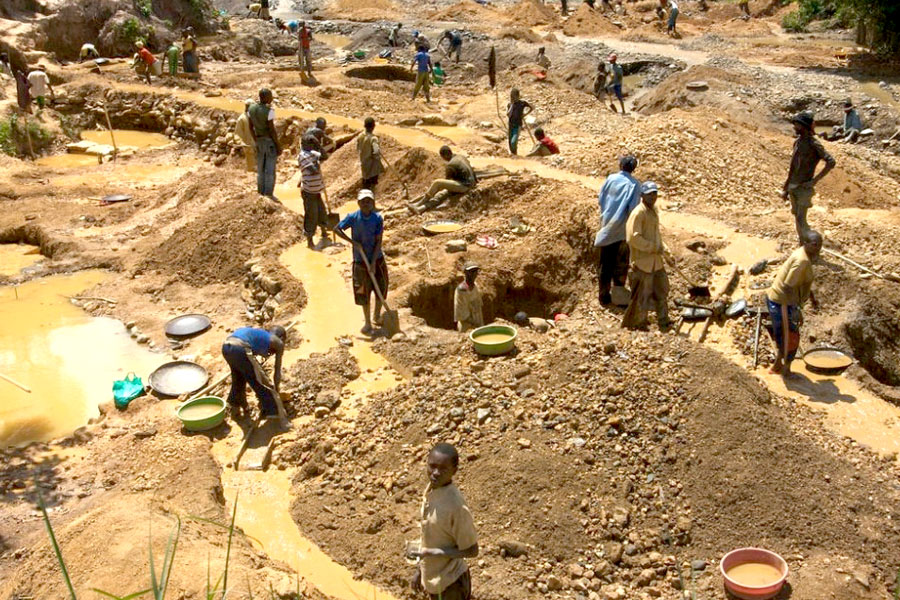
Addis Ababa - A surge in illegal gold mining across Ethiopia has spiralled into what investigators describe as a “crisis of colossal scale,” as global gold prices soar and lawlessness spreads through the country’s conflict-affected regions.
According to an
in-depth investigation by The Bureau of
Investigative Journalism, foreign companies — including Chinese and
Western operators — are reportedly exploiting fragile governance and security
vacuums to extract gold illicitly from some of Ethiopia’s most volatile areas.
The findings suggest that the unregulated rush for gold is intensifying local
conflicts, accelerating environmental destruction, and deepening the
vulnerability of impoverished communities.
“This is not just
about illegal mining; it’s about the systematic looting of national wealth
under conditions of conflict and instability,” said one regional observer
familiar with the report. “Communities are being left with poisoned rivers,
destroyed farmland, and no share of the profits.”
Ethiopia, long seen
as one of Africa’s emerging gold producers, has struggled to regulate artisanal
and industrial mining in its borderlands and peripheral regions, where weak
oversight and corruption have allowed shadow economies to flourish. The ongoing
turmoil in parts of Oromia, Benishangul-Gumuz, and the south-western regions
has further complicated government efforts to enforce environmental and fiscal
controls.
Analysts warn that
the unchecked exploitation of gold and other natural resources in fragile
settings can have devastating consequences — fuelling armed groups, undermining
governance, and draining public revenues. For Ethiopia, which is striving to
rebuild and stabilise post-conflict regions, the stakes could not be higher.
“Resource
extraction without accountability is a recipe for renewed conflict,” said an
Addis Ababa–based economist. “The government risks losing both revenue and
legitimacy if communities see only outsiders benefitting from their land.”
The report also
underscores the global dimension of the problem, linking Ethiopia’s illegal
gold trade to international supply chains that feed refineries and markets in
Asia and Europe. Activists have urged tighter due diligence by foreign buyers
and stronger international cooperation to curb illicit flows.