By Staff Reporter
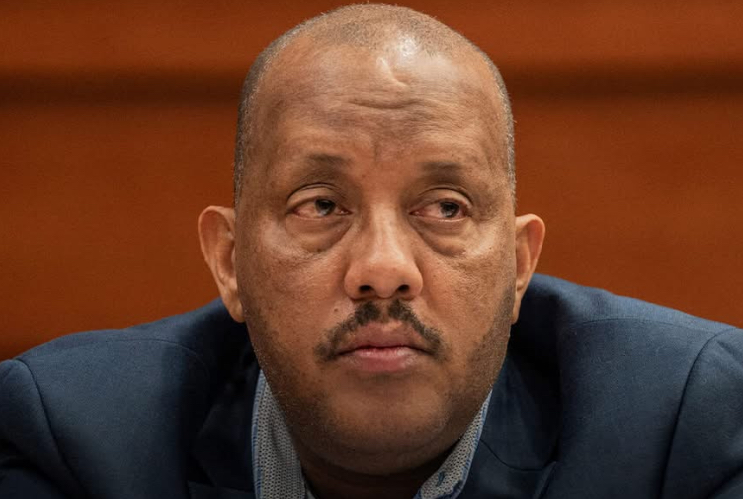
Addis Abeba — The Interim Administration established in Tigray Regional State following the November 2022 Pretoria Peace Agreement is facing mounting criticism amid deepening political infighting, security breakdowns and worsening humanitarian conditions, according to claims made by former Interim Administration President Getachew Reda.
The Interim Administration was envisioned as a transitional body to stabilise the war-torn region, restore civilian governance and pave the way for a return to constitutional order. However, more than three years after the cessation of hostilities, the Administration has struggled to assert authority beyond the regional capital, Mekelle, while key provisions of the Pretoria Agreement — including the return of internally displaced persons (IDPs) and the resolution of territorial disputes in Western Tigray — remain unimplemented.
At the centre of the controversy is Lt. Gen. Tadesse Werede, current President of the Interim Administration of Tigray (IAT) and former Vice President responsible for security affairs. Getachew alleges that Tadesse played a decisive role in undermining civilian authority during the first phase of the Interim Administration, contributing to its eventual collapse.
According to Getachew, tensions between reform-minded civilian officials and hardline elements within the Tigray People’s Liberation Front (TPLF) paralysed governance. He contends that despite the peace agreement’s call for an inclusive and civilian-led administration, the TPLF continued to exert dominant influence over state institutions, resisting efforts to separate party structures from government functions.
Security forces, particularly senior commanders within the Tigray Defence Forces (TDF), are also accused of being drawn into factional political disputes. Getachew claims that coordinated actions by TDF commanders in several zones obstructed the implementation of administrative decisions, intimidated local officials and weakened the Interim Administration’s reach.
“These dynamics eroded the legitimacy of civilian governance and entrenched the perception that real authority lay outside formal institutions,” Getachew wrote.
The politicisation of security forces, he argues, has had long-term consequences, transforming the TDF from a wartime defence force into a central actor in internal power struggles. Recent armed protests by TDF units, including the temporary takeover of key government offices and media outlets in Mekelle, have heightened concerns over the erosion of civilian control.
The Interim Administration is also facing criticism over deteriorating humanitarian conditions. More than a million people remain internally displaced, many of them from Western Tigray. Reports and images circulating in recent weeks from IDP camps such as Hitsats show severe malnutrition among women, children and the elderly, sparking public outrage domestically and among the diaspora.
Getachew accuses the current leadership of failing to anticipate or respond to early warning signs of food insecurity, convening emergency measures only after the crisis gained widespread attention on social media.
Security tensions have further escalated following recent clashes between TDF units and the Ethiopian National Defence Force (ENDF), reportedly linked to renewed disputes over Western Tigray. The confrontation prompted Ethiopian Airlines to suspend flights to Mekelle temporarily, triggering public anxiety and liquidity shortages as residents rushed to withdraw cash from banks.
While President Tadesse later characterised the clashes as a limited engagement, critics argue that the incident exposed strategic miscalculations and inflicted avoidable human and economic costs on an already fragile region.
Observers warn that continued factionalism, weak civilian oversight and the entanglement of security forces in political rivalries risk prolonging instability in Tigray. Analysts note that without a clear reform agenda, credible accountability mechanisms and renewed commitment to the full implementation of the Pretoria Agreement, prospects for sustainable peace and recovery remain uncertain.
As humanitarian needs mount and political legitimacy continues to erode, pressure is growing on both regional and federal authorities to reassess the trajectory of the Interim Administration and prevent further deterioration in one of Ethiopia’s most fragile regions.