The Development Bank of Ethiopia (DBE) is exploring the introduction of Sukuk, Sharia-compliant Islamic bonds, in a move that could signal a strategic shift in how development finance is mobilised in the country. Discussions held with FSD Ethiopia suggest that the Bank is positioning interest-free financial instruments not merely as niche products, but as potential alternatives for long-term capital mobilisation.
Sukuk differ fundamentally from conventional bonds. Rather than offering fixed interest payments, they are structured around asset ownership, granting investors proportional claims over tangible assets or projects financed through the proceeds. Returns are generated from the performance of those assets, aligning the instrument with Sharia principles that prohibit interest-based lending. Globally, Sukuk have been widely deployed to finance infrastructure, housing, energy, and industrial projects, particularly in the Gulf, Southeast Asia, and parts of Africa.
Officials familiar with the discussions indicate that DBE has been studying the Sukuk framework for an extended period and has already completed several preparatory steps. Current talks are centred on implementation mechanics, including institutional readiness, technical design, and capacity constraints. These deliberations reflect a growing recognition that Ethiopia’s financing needs—particularly for large-scale development projects—cannot be met through conventional banking instruments alone.
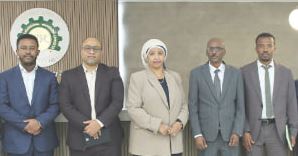
The meeting brought together Isaias Kassa (PhD), President of the Development Bank of Ethiopia, and Hikmet Abdullah, Chief Executive Officer of FSD Ethiopia, along with senior representatives from both institutions. Areas of discussion included technical assistance for structuring Sukuk instruments, capacity-building for DBE’s interest-free banking operations, and potential avenues for sustained institutional collaboration.
For DBE, Sukuk issuance could represent a meaningful diversification of funding sources. As a development finance institution, the Bank plays a central role in financing priority sectors such as manufacturing, agriculture, and infrastructure. However, long-term financing remains constrained by limited domestic capital markets, foreign exchange shortages, and rising pressures on public and quasi-public borrowing. Sukuk could offer a pathway to attract pools of capital that are currently underutilised in Ethiopia’s financial system.
Demand for interest-free financial services has expanded steadily over the past decade, driven by demographic growth, religious considerations, and increased awareness of Islamic finance products. Commercial banks have responded by introducing interest-free windows and dedicated services, but the development finance segment has remained largely untapped. A Sukuk issuance by DBE would mark one of the first large-scale attempts to apply Islamic finance instruments to development banking in Ethiopia.
The potential investor base extends beyond domestic markets. Sukuk could enable DBE to access regional and international Islamic finance investors, including institutions in the Middle East and parts of Asia, where appetite for asset-backed, development-oriented instruments remains strong. However, realising this potential would require robust governance frameworks, transparent asset selection, and regulatory clarity—areas that remain under development in Ethiopia’s financial system.
Regulatory alignment is expected to be a critical factor. While Ethiopia has taken steps to accommodate interest-free banking within its legal framework, Sukuk issuance introduces additional complexities related to asset ownership, special purpose vehicles, risk-sharing arrangements, and investor protection. These issues would need to be carefully addressed to ensure both Sharia compliance and financial stability.
FSD Ethiopia’s involvement reflects its broader mandate to support financial sector development through technical assistance, market diagnostics, and institutional strengthening. By supporting DBE’s exploration of Sukuk, FSD Ethiopia appears to be backing a model that blends financial inclusion objectives with capital market innovation.
From a policy perspective, the initiative aligns with broader efforts to diversify Ethiopia’s financial architecture. The dominance of traditional banking, limited capital market instruments, and constrained long-term financing options have long been cited as structural bottlenecks to economic growth. Islamic finance instruments such as Sukuk are increasingly viewed by policymakers and development partners as complementary tools rather than substitutes for conventional finance.
However, challenges remain. Asset-backed financing requires well-defined, revenue-generating projects, credible valuation mechanisms, and strong project management capacity. Without these, Sukuk risk becoming symbolic rather than transformative. Market education will also be critical, as both investors and issuers must understand the risk-return dynamics of Sukuk structures.
If successfully implemented, a Sukuk issuance by DBE could establish an important precedent for other public institutions and financial entities. It could also accelerate the maturation of Ethiopia’s interest-free finance ecosystem, pushing it beyond basic deposit and trade-finance products toward more sophisticated capital market instruments.
While no timeline has been publicly disclosed, the ongoing discussions suggest that Sukuk are moving from conceptual exploration toward practical consideration. Whether DBE ultimately proceeds will depend on regulatory readiness, institutional capacity, and market appetite. What is clear, however, is that interest-free finance is increasingly being framed not as a marginal accommodation, but as a strategic component of Ethiopia’s evolving financial landscape.