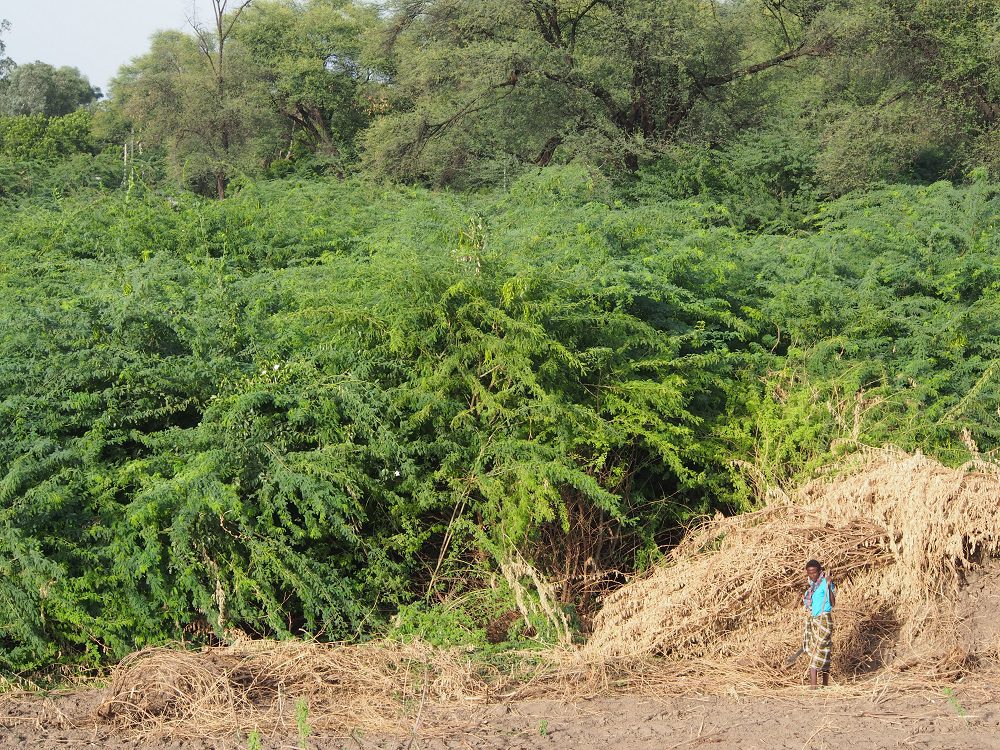
Addis Ababa - An invasive tree species, Prosopis, introduced to Ethiopia in the 1970s, is wreaking havoc on ecosystems and local livelihoods in the Afar region. Environmental experts warn that the fast-spreading species is depleting scarce water resources, damaging grazing land, and disrupting the delicate balance of the region’s ecosystems.
Communities across
Afar, many of whom rely on pastoralism, report severe impacts on livestock
health and productivity as Prosopis
encroaches on pastures and competes for water. The tree’s aggressive growth
also blocks access to fertile land and traditional water points, exacerbating
the hardships of already vulnerable populations in one of Ethiopia’s driest
areas.
“Prosopis has become a formidable threat,” said a regional
environmental officer. “It is not only altering the landscape but also
undermining the livelihoods of pastoralist communities who have depended on
this land for generations.”
The ecological
consequences are equally grave. The invasive tree suppresses native vegetation,
reduces biodiversity, and accelerates desertification in a region already
highly sensitive to climate variability. Attempts to eradicate or control the
species have been only partially successful, with limited resources and
technical capacity hindering large-scale intervention.